1. The Village Was Already Teaching
“What if the first classroom we ever entered was not a school, but a community?”
Before I learned to write my name, my village was already teaching me.
Not through textbooks.
Not through examinations.
Not through certificates framed on walls.
My first teachers were two elderly women.
One was my grandmother. The other was an elderly woman who lived within our family compound in Afon, a rural community in Kwara State, Nigeria.
As evening settled over the village, we would gather around them. The air softened, conversations slowed, and stories began. There were no desks or blackboards, yet those moments became some of the richest classrooms I have ever known.
The elderly woman delighted in riddles.
“Àló ò…”
“Àló!” we replied eagerly.
Each riddle invited us to think beyond the obvious. Some drew from animals, others from trees, rivers, seasons, or human character. We laughed when we guessed wrongly and celebrated when someone uncovered the answer. Looking back, I realise those evenings were quietly shaping our imagination and sharpening our critical thinking.
We were learning that wisdom often arrives disguised as curiosity.
My grandmother taught differently.
She rarely sat us down to explain values. She simply lived them.
Although she never had the privilege of owning a mobile phone, she somehow kept our family connected. She remembered relatives living in distant towns, asked after their well-being, and made it a habit to visit them whenever she could.
As a child, I thought she was simply being kind.
Now I understand she was teaching us something deeper.
She was teaching us that relationships require tending, just as farms require rain and rivers require care.
She embodied the Yoruba saying, “Eniyan l’aso mi.” People are my covering.
Long before I understood the word community, she had already shown me what it looked like.
Years later, I began to notice that the entire village was teaching in much the same way.
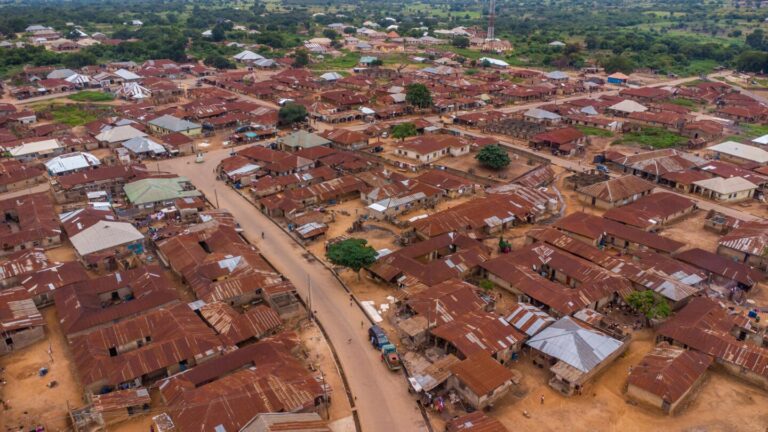
Afon is the administrative headquarters of Asa Local Government in Kwara State. Many know it because of the Afon Fishing Festival, a tradition that has been celebrated for generations. Others know it for the Asa River, which winds quietly through the community.
But the river is much more than a tourist attraction.
It is memory.
It is livelihood.
It is teacher.
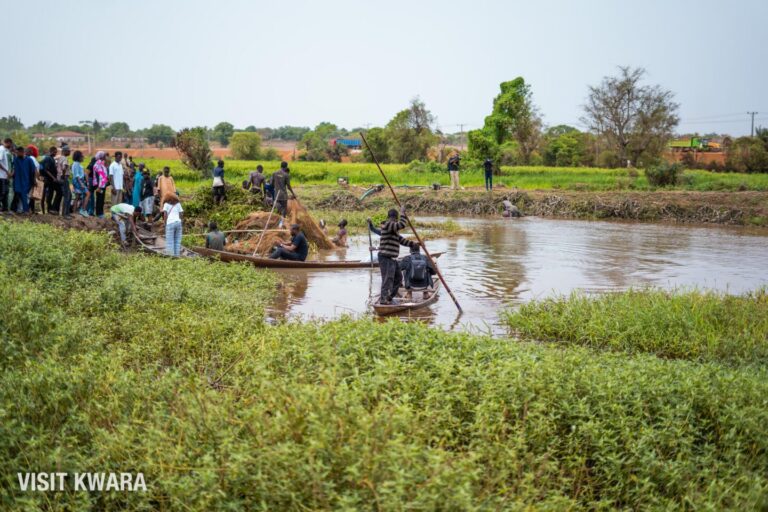
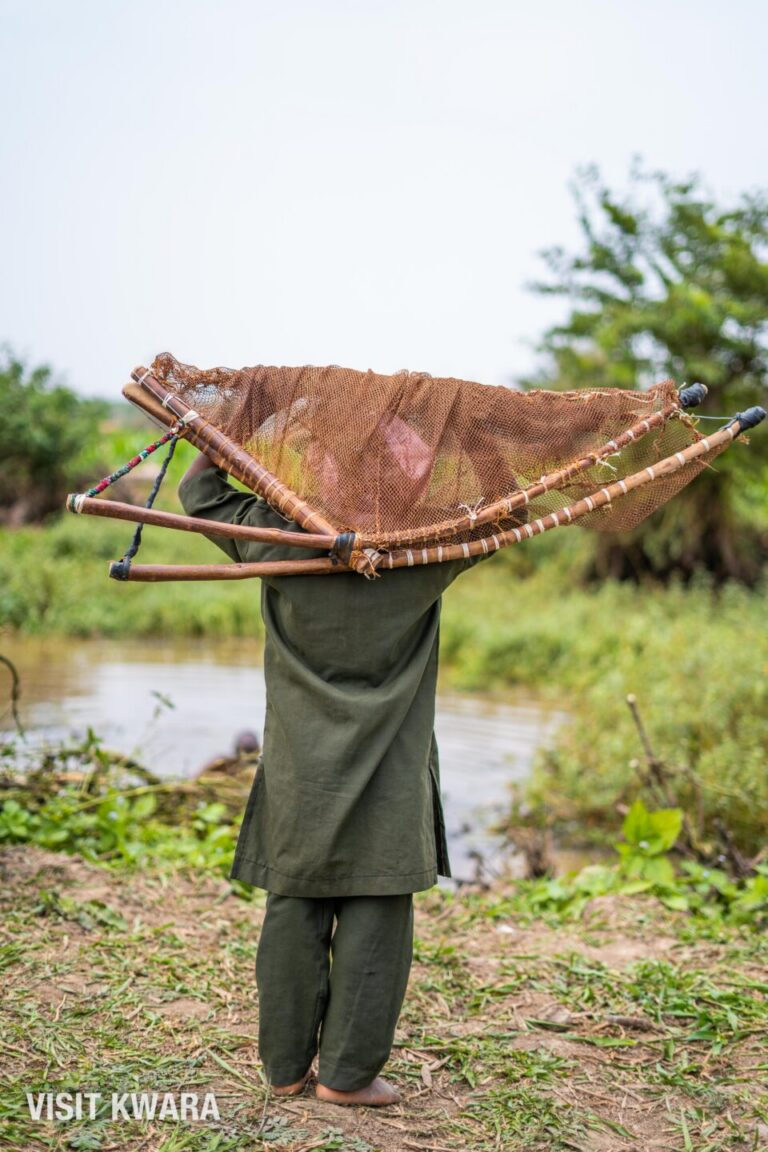
Throughout the year, Hausa fishermen rise before dawn to cast their nets into its waters. Farmers draw from the river to irrigate their fields, allowing crops to flourish even during the dry season. Many of these men hold no formal certificates, yet they possess a remarkable understanding of seasons, soil, water, and the behaviour of fish.
They do not read books to understand the river.
They read the river itself.
Their classroom has always been the land beneath their feet and the water before their eyes.
Watching them has often made me wonder why we so easily recognise knowledge when it comes from institutions, yet overlook it when it comes from lived experience.
Who decides what counts as education?
What wisdom disappears when we only honour learning that can be examined?
Perhaps the greatest lesson the river offers is not about fishing at all.
It is about generosity.
Every year, during the Afon Fishing Festival, something beautiful unfolds that visitors rarely expect.
Fishermen arrive carrying simple food, often yams and potatoes. Before the day’s excitement begins, they roast them over open fires and share them freely. No one asks who brought what. No one keeps count.
Everyone eats.
Later, when the fishing begins, another quiet tradition emerges.
Those who make the biggest catches seldom take everything home.
The fish are shared with neighbours, visitors, and participants from other communities. The celebration is not measured by how much one person keeps, but by how much everyone can enjoy together.
In Ilorin, people often say, “Àjọṣe ni ń mú ìlera àwùjọ wá.” It is togetherness that strengthens a community.
The festival lives out that wisdom.
In a world that often celebrates ownership, the river teaches relationships.
In a world that rewards accumulation, the village practises abundance through sharing.
These are lessons I never found in a curriculum.
Today, through my work with Prikkle Academy, I often find myself returning to these early memories. We speak about reimagining education, creating spaces for creativity, and nurturing young people to become problem-solvers.
Yet I have come to realise that innovation does not always begin by inventing something new.
Sometimes it begins by remembering what we have forgotten.
Perhaps our communities have never lacked knowledge.
Perhaps they have simply lacked recognition.
When I look back at my childhood now, I no longer remember only the stories my grandmother told or the riddles that made us laugh.
I remember something far more important.
I remember a village that refused to separate learning from living.
A river that taught generosity.
A grandmother who taught belonging.
An elderly storyteller who taught curiosity.
A community that taught me education is not confined to classrooms.
It is woven into relationships, landscapes, memory, and the quiet rituals of everyday life.
So I leave you with the question that continues to follow me:
If the village was already teaching, what classrooms have we forgotten to see in our own communities?
2. When a Festival Becomes a School
“The lessons I remember most were never written on a chalkboard. They arrived with the sound of water, laughter, and people gathering before sunrise.”
Long before I understood why people travelled from different communities to attend the Afon Fishing Festival, I simply thought it was a day of excitement.
Children woke earlier than usual.
Families prepared for visitors.
The roads became unusually busy.
Everyone seemed to be walking toward the same destination, the banks of the Asa River.
As a child, I was captivated by the colours, the songs, the laughter, and the anticipation that filled the air. I watched fishermen carrying their nets with quiet confidence, elders exchanging greetings, and people arriving from neighbouring communities as though they had answered the same invitation.
It looked like a festival.
Years later, I realised I had been witnessing a classroom.
Not the kind with walls and timetables.
A classroom that opened only because a community remembered.
The Afon Fishing Festival has been celebrated for generations.
Many people know it for the fishing competition.
Others know it as a tourist attraction.
Some see it as an annual cultural event.
But those descriptions only scratch the surface.
For the people of Afon, the festival is also a living archive.
Every gathering carries memories of those who stood by the river before us.
Every story shared by an elder becomes another page in a history book that has never been printed.
Every child watching quietly from the riverbank is learning something that cannot easily be taught in a classroom.
The festival is how a community remembers itself.
One memory has remained with me more vividly than any photograph ever could.
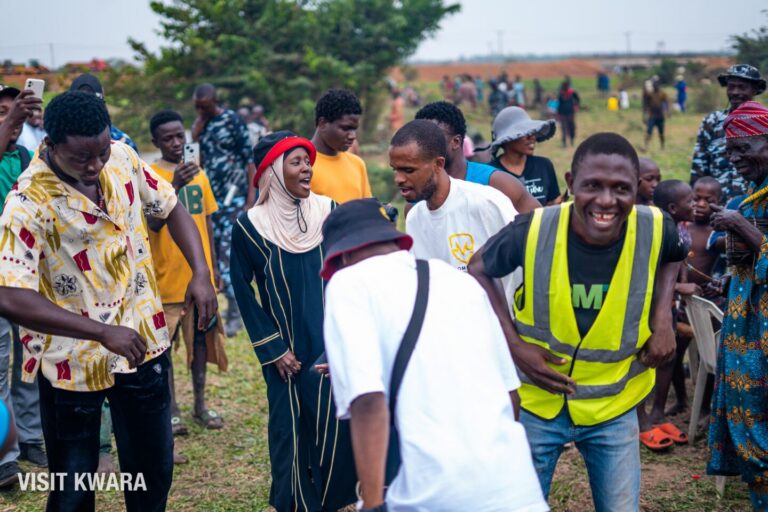
Before the fishing even began, many of the fishermen gathered around small fires.
Some had brought yams.
Others carried potatoes.
The food was roasted over open flames.
There was no invitation.
No list of who contributed.
No expectation that everyone must bring something.
People simply shared.
If you had food, you offered it.
If you arrived with nothing, someone made space for you.
As a child, I accepted this as normal.
Today, I realized I was watching an education in generosity.
No one announced a lesson.
No one gave a speech.
Yet everyone was learning.
The fire was the classroom.
The meal was the curriculum.
The act of sharing was the examination.
Later, another lesson quietly unfolded.
Some fishermen returned with remarkable catches.
Large fish.
Heavy baskets.
The kind of catch many would proudly take home.
Instead, they began giving fish away.
Neighbours received some.
Visitors received some.
People from neighbouring communities returned home carrying gifts from the river.
Nobody seemed concerned with leaving as the person who had caught the most.
The greater joy came from making sure others shared in the blessing.
Standing there, I began to understand something the river had been teaching long before I was born.
Abundance is not measured by what one person keeps.
It is measured by what a community is willing to share.
There is another kind of learning taking place during the festival that is easy to overlook.
Children watch how elders greet one another.
Young people observe how disagreements are settled respectfully.
Visitors learn the history of the Asa River.
Farmers and fishermen exchange knowledge gathered from seasons spent listening to the land and water.
No one calls these workshops.
No certificates are awarded.
Yet every year, another generation quietly inherits ways of living together.
Perhaps this is why I have become increasingly interested in reimagining education.
Through my work with Prikkle Academy, I have seen how creativity, innovation, and problem-solving flourish when learning begins with people’s lived experiences.
But whenever I hear conversations about innovation, I often think back to the river.
Innovation is important.
So is remembering.
Sometimes the future of education begins not with inventing something entirely new, but with recognising the wisdom that has quietly sustained communities for generations.
Today, many festivals around the world are measured by the number of visitors they attract, the revenue they generate, or the entertainment they provide.
Those things have their place.
But I wonder if we are overlooking something far more valuable.
What if festivals are among humanity’s oldest classrooms?
Places where history is not recited but lived.
Where generosity is not preached but practised.
Where identity is not explained but experienced.
Where children learn simply by paying attention.
The Asa River still flows through Afon.
Every year, people continue to gather along its banks.
Visitors come expecting a festival.
I now arrive expecting a lesson.
Because I have come to believe that every community holds classrooms that open only when people gather with intention.
Sometimes they open beneath a tree.
Sometimes around a fire.
Sometimes beside a river.
And sometimes, if we are willing to slow down and listen, they remind us that education has always been much larger than the buildings we have constructed to contain it.
Perhaps the question is no longer whether festivals can teach us.
Perhaps the real question is this:
When did we stop recognising them as schools?
3. The Teachers Without Certificates
“Some of the wisest teachers I have known have never stood in front of a classroom.”
When people ask me who inspired my understanding of education, they often expect me to mention a lecturer, a book, or a famous educator.
Sometimes they are surprised when I hesitate.
Not because I have no answer.
But because the answer is difficult to fit into a single name.
My teachers have never all worked in schools.
Some wake before sunrise to cast fishing nets into the Asa River.
Some spend long days under the sun, reading the moods of the soil before planting a single seed.
Some have never held a university certificate.
Some cannot explain their knowledge using academic language.
Yet they understand things that no textbook has ever fully captured.
Growing up in Afon, I rarely questioned this.
Knowledge lived everywhere.
It lived in conversations beneath mango trees.
It travelled through stories shared after sunset.
It appeared in calloused hands that could repair what others had thrown away.
It rested in eyes that could predict rain simply by watching the sky.
Nobody introduced these people as experts.
They were simply neighbours.
One group of teachers continues to humble me.
The Hausa fishermen who work along the Asa River.
Many people see only their labour.
I see something else.
I see observation refined over decades.
They know where fish gather when the river rises.
They know how changing winds affect the water.
They understand patience in ways our fast-moving world rarely values.
No university awarded them these lessons.
The river did.
Every season became another chapter.
Every mistake became another teacher.
Every sunrise became another examination.
Their graduation never came with a certificate.
It came with competence.
The farmers teach in much the same way.
Long before conversations about climate resilience reached international conferences, they were already adapting.
They studied changing rainfall.
They learned when to plant.
They drew life from the Asa River during dry seasons through irrigation.
Their knowledge did not emerge from research papers.
It emerged from relationships.
Relationships with soil.
With water.
With seasons.
With uncertainty.
Watching them reminds me that education is not simply the transfer of information.
Sometimes, it is the slow cultivation of attention.
As I grew older, I entered classrooms where knowledge was organised into subjects, assessed through examinations, and recognised through certificates.
I am grateful for that education.
It opened many doors.
It gave me language to understand the world.
But it also made me notice something uncomfortable.
The more educated we become, the easier it can be to overlook other forms of knowing.
We celebrate the engineer.
But rarely ask who first taught us to understand the land.
We admire innovation.
Yet forget those who have quietly been innovating for generations using whatever resources they had.
We speak about lifelong learning.
Meanwhile, entire communities have been practising it all along.
Through my work with Prikkle Academy, I often meet young people who doubt their abilities because they struggle within conventional education.
Whenever I see that, I think of the people who raised me.
The storytellers.
The fishermen.
The farmers.
The grandmothers.
None of them measured intelligence through examination scores.
They recognised curiosity.
Responsibility.
Generosity.
Patience.
The willingness to keep learning.
Those qualities cannot always be graded.
Yet they shape lives.
One of the greatest gifts my community has given me is the courage to expand my definition of a teacher.
Today, when I facilitate learning, I try not to enter a community believing I have arrived with knowledge.
Instead, I arrive with questions.
Who is already teaching here?
What wisdom already exists?
What conversations have we ignored because they happen outside formal institutions?
Those questions have transformed not only my work but also my understanding of education itself.
There is a Yoruba proverb that says, “Agbà kì í wà l’ọ́jà kí orí ọmọ tuntun wọ.”
“An elder cannot be present in the marketplace while a child’s head remains tilted.”
The proverb reminds us that wisdom is not simply accumulated. It is shared. The responsibility of one generation is to guide the next.
Perhaps that is what teachers have always done.
Not only those standing before classrooms.
But also those standing in rivers.
Walking through farms.
Gathering children beneath evening skies to tell stories.
Or quietly reminding us that the greatest lessons often arrive without fanfare.
Sometimes I imagine what would happen if we created a different kind of graduation ceremony.
One where we honoured the grandmother who kept a family together.
The farmer who taught resilience through the seasons.
The fisherman who understood the language of the river.
The artisan who repaired what others discarded.
Not because they replaced formal education.
But because they completed it.
Education has never belonged to schools alone.
It has always belonged to humanity.
Perhaps our task is not to create new teachers.
Perhaps it is to learn how to recognise the ones who have always been among us.
4. Learning to Stay
What if leaving is not the only way to dream?
There was a time when I believed that every successful journey began with leaving.
Growing up in Afon, a rural community in Kwara State, Nigeria, I often heard the same story repeated in different ways. Study hard. Get a good job. Move to a bigger city. Build a better life somewhere else.
It was never said with bad intentions.
For many families, leaving represented hope. It meant access to opportunities that rural communities often struggle to provide. It was the path many admired, and understandably so.
For a long time, I believed that story too.
Then something unexpected happened.
The more I travelled, the more I found myself looking back.
Not because Afon had everything.
But because I began to realise it held something I could not easily find elsewhere.
It held relationships.
It held memories.
It held knowledge.
It held a way of seeing the world that had quietly shaped me long before I understood its value.
I began asking myself a question that slowly changed the direction of my work.
What if success is not only about where we go, but also about what we choose to nurture?
That question continues to guide me today.
When I became involved with Prikkle Academy, I did not see rural communities as places waiting to be rescued.
I saw communities already carrying extraordinary gifts.
Young people with imagination waiting to be trusted.
Elders carrying knowledge that rarely appears in books.
Children asking questions that deserve more than predetermined answers.
We often speak about innovation as though it arrives from somewhere else.
Yet some of the most meaningful innovations I have witnessed began with listening.
Listening before leading.
Observing before proposing solutions.
Recognising assets before identifying needs.
That simple shift changed not only the way I worked, but also the way I understood home.
Every year, I have the privilege of serving as the Lead Organiser of the Afon Fishing Festival.
Many people see the festival as a celebration.
Others know it as a tourism event.
For me, it has become something much deeper.
Each planning meeting reminds me that communities are built through relationships long before they are built through programmes.
Organising the festival is rarely about logistics alone.
It is about bringing generations into conversation.
Listening to elders who safeguard the history of the river.
Working alongside young volunteers whose energy gives new life to old traditions.
Welcoming visitors while ensuring that the festival remains rooted in the values that gave birth to it.
Every edition teaches me that leadership is not about standing in front.
Sometimes it means standing among.
The festival has become one of my greatest classrooms, not because I organise it, but because it continually teaches me what collective responsibility looks like.
People sometimes ask why I continue investing my time in a rural community when there are opportunities elsewhere.
I understand the question.
For generations, we have been taught to admire departure more than presence.
Leaving has become a symbol of achievement.
Staying is too often mistaken for a lack of ambition.
But I have come to see staying differently.
Staying does not mean refusing to grow.
It means allowing your growth to nourish the place that first nourished you.
It means believing that transformation can begin where your feet already stand.
It means recognising that the communities we come from deserve not only our memories, but also our imagination.
There is a Yoruba proverb that says, “Ilé ni a ti ń kó ẹ̀ṣọ́ r’òde.”
“It is from home that we prepare ourselves for the world.”
For many years, I understood only the first half of that wisdom.
Home prepares us.
Now I am learning the second half.
Sometimes the world prepares us to return home differently.
Not because home stayed the same.
But because we learned to see it with new eyes.
I do not know where every chapter of my journey will lead.
I still dream.
I still travel.
I still learn from people and places far beyond Afon.
But wherever those journeys take me, I hope they continue returning me to the same question.
How do we honour the places that first taught us how to belong?
Because perhaps the opposite of leaving is not staying.
Perhaps the opposite of leaving is forgetting.
And I do not want to forget the village that first taught me how to dream.
5. A Letter to My Grandmother
The Lessons I Never Thanked You For
Dear Grandma,
There are conversations I wish we had while you were still here.
Not because you left anything unfinished.
But because I have only recently begun to understand the life you were quietly teaching me.
As a child, I thought you were simply my grandmother.
Today, I realized you were my first university.
You never stood in front of a classroom.
You never held a microphone.
You never published a book.
Yet your lessons have travelled farther than either of us could have imagined.
I wonder what you would think if I told you that people from different parts of the world now ask me about education.
You would probably laugh.
Then remind me to eat before answering them.
That was your way.
Always bringing wisdom back to ordinary life.
I remember how you carried our family.
Not physically.
Relationally.
Long before mobile phones became part of everyday life, you somehow knew who needed a visit.
Who had not been home for a while.
Who might be lonely.
Who might be grieving.
You refused to let distance become disconnection.
As a child, I thought those journeys were ordinary.
Now I understand they were acts of love.
You never called it community building.
You simply called it family.
Looking back, I realise you were teaching me something our generation desperately needs.
Relationships do not survive because they exist.
They survive because someone keeps walking toward them.
Do you remember those evenings?
The compound growing quieter.
Children slowly gathering.
Stories replacing the noise of the day.
Another elderly woman beginning a riddle with the familiar words,
“Àló ò…”
And all of us responding,
“Àló!”
Back then, I thought we were only playing.
Today I realise those riddles were shaping the architecture of our minds.
You were teaching us to listen before speaking.
To think before answering.
To enjoy mystery instead of rushing toward certainty.
Nobody called it critical thinking.
Nobody called it education.
Yet that is exactly what it was.
Grandma, the world I now move through is very different from yours.
People measure success with titles.
Followers.
Degrees.
Awards.
Sometimes I receive invitations to speak.
Sometimes people introduce me with words that would probably make you smile politely before asking whether I had remembered to greet the elders properly.
Because for you, character always arrived before achievement.
Respect always came before recognition.
Service always mattered more than status.
I did not fully appreciate those lessons then.
I carry them everywhere now.
Much of my work today happens through Prikkle Academy.
People often ask how we think about education.
Sometimes they expect me to begin with innovation.
Technology.
Creativity.
New ideas.
Those things matter.
But they are never where my story begins.
My story begins with you.
Because before I learned how to facilitate workshops, I watched you facilitate belonging.
Before I learned about community development, I watched you build community one visit at a time.
Before I discovered words like “relational learning,” I watched you practise it without ever needing a name for it.
You taught me that education is not only about helping people know more.
It is also about helping people care more.
There is something else I have never thanked you for.
You never made me ashamed of where I came from.
Without saying it directly, you taught me that Afon was not a place to escape.
It was a place worth loving.
A place worth serving.
A place worth remembering.
That lesson has shaped many of the decisions I make today.
It is why I continue returning.
Why I help organise the Afon Fishing Festival each year.
Why I believe rural communities deserve to be recognised not only for their challenges, but also for the wisdom they carry.
I wish you could see it.
I think you would simply nod.
As if you had known all along.
There is a Yoruba saying that has followed me throughout my life:
“Igi kan kò dá igbó ṣe.”
A single tree does not make a forest.
I understand those words differently now.
None of us becomes who we are alone.
We are shaped by grandparents who tell stories.
Neighbours who correct us.
Communities that hold us.
Rivers that sustain us.
Festivals that remind us who we are.
And people like you, whose names may never appear in history books, yet whose fingerprints remain on generations.
Sometimes I wonder how many people are walking through the world carrying invisible teachers inside them.
Teachers they never thought to thank.
Teachers who never received certificates.
Teachers who transformed lives without ever knowing it.
Perhaps that is why I wanted to write this letter.
Not because you needed to hear it.
But because I needed to say it.
Thank you…
For teaching me that love is something we practise.
That relationships need tending.
That wisdom often whispers instead of shouting.
That home is not simply where we begin.
Sometimes, it is where we spend our whole lives learning how to return.
With gratitude,
Your grandson,
Jamiu
6. What the River Knows
A Conversation with the Asa River
I have been here longer than any map remembers.
Before roads divided this land.
Before borders acquired names.
Before schools were built.
Before people argued over what should count as knowledge.
I was already flowing.
You call me the Asa River.
But names are only one way of knowing.
Long before anyone gave me a name, children learned to recognise my voice.
Women knew where to collect water without disturbing my current.
Fishermen understood when I was generous and when I asked them to wait.
Farmers watched my movements with the same attention others reserved for calendars.
No one taught them these things.
They learned because they belonged to me, and I belonged to them.
Every morning I watch people arrive.
Some come carrying fishing nets.
Some come carrying hoes.
Some come carrying questions.
The oldest among them rarely hurry.
They know that rushing is not the language of rivers.
They sit.
They observe.
They wait.
The younger ones often think they are doing nothing.
But I know better.
Waiting has always been one of the oldest forms of learning.
I have watched generations grow beside my banks.
Children who once laughed while chasing dragonflies now return with children of their own.
Some recognise me immediately.
Others pass by without looking.
Many leave this village believing the world exists somewhere else.
Some eventually return.
When they do, they no longer see only water.
They begin to see memory.
Once every year, something beautiful happens.
The village remembers me.
People call it the Afon Fishing Festival.
Visitors arrive carrying cameras.
Children arrive carrying excitement.
Elders arrive carrying stories.
The fishermen arrive carrying hope.
They celebrate the fish.
I celebrate the people.
Because for a single day, they remember something they often forget throughout the year.
That they belong to one another.
I have watched food pass from stranger to stranger before a single fish is caught.
Roasted yams.
Potatoes.
Shared without counting.
Without asking who deserves more.
Without keeping score.
I have watched fishermen return with baskets too heavy for one family alone.
The fish travel from hand to hand.
No announcement is made.
No one applauds.
Generosity has never needed an audience.
People often think I feed this community.
That is only partly true.
The community feeds me too.
Every story remembered.
Every child brought here.
Every elder who still speaks my name with affection.
Every volunteer who helps organise the festival.
Every young person who chooses not only to celebrate this place but also to protect it.
They remind me that rivers survive not only through rain.
They survive through relationships.
In recent years, I have watched a young man return more often.
He no longer comes only as a curious child.
He arrives with notebooks.
Conversations.
Ideas.
Young people.
His name is Jamiu.
He believes this village still has something to teach.
He helps organise the festival, not simply so more people will visit, but so more people will remember.
I smile whenever I see that.
Because memory is another way of flowing.
People ask whether I am worried.
Of course I am.
I have seen seasons change.
I have watched traditions become quieter.
I have heard children speak languages their grandparents cannot understand.
I have watched communities become busier but less connected.
I have watched people photograph me without ever truly seeing me.
But I have also witnessed something else.
Young people asking questions.
Communities listening again.
Old stories finding new voices.
Perhaps that is enough reason to keep flowing.
You think I am only a river.
I think you have forgotten how to listen.
I have never stopped teaching.
I teach patience to fishermen.
Resilience to farmers.
Generosity to neighbours.
Humility to anyone willing to admit they cannot control the current.
I remind communities that life moves in seasons.
That abundance and scarcity both pass.
That nothing flourishes alone.
One day, long after today’s conversations have faded, I will still be here.
Flowing quietly through Afon.
Watching another generation gather on my banks.
Waiting for another child to ask a question.
Waiting for another elder to tell a story.
Waiting for someone to realise that rivers do not merely carry water.
They carry civilizations.
They carry memories.
They carry love.
And if you sit beside me long enough…
Perhaps I will teach you too.
About the author